
Moles, or nevi, are common skin growths that can vary in size, shape, and color. While most moles are harmless, some can develop into skin cancer, so it’s important to monitor any changes in their appearance. Dr. Amr Agha at Advanced Dermatology in Acworth, Georgia, wants patients to understand the significance of moles and the criteria used to determine when and why mole removal is done.
The ABCDEs of Mole Evaluation
Dermatologists often use the ABCDE method to evaluate moles and assess their potential risk for skin cancer. This acronym stands for Asymmetry, Border, Color, Diameter, and Evolving.
Asymmetry refers to the shape of the mole; if one half does not match the other, it may be a cause for concern. The border of a healthy mole should be smooth and even, while irregular or jagged edges may indicate a problem. Color is another critical factor; moles that have multiple colors or an uneven distribution of color can be suspicious. Diameter is also important; moles larger than a pencil eraser (about 6mm) should be evaluated. Finally, evolving refers to any changes in the mole's size, shape, color, or elevation over time. If a mole exhibits any of these characteristics, it warrants further examination.
Clinical Examination and Patient History
When assessing a mole in our Acworth, Georgia, office, Dr. Agha conducts a thorough clinical examination. This involves visually inspecting the mole and surrounding skin, as well as palpating the area to check for any unusual texture or sensitivity. During this examination, we will also take a detailed patient history, including any family history of skin cancer, personal history of sun exposure, and any previous skin issues.
This comprehensive approach can aid in determining whether a mole poses a risk. If there are any concerning signs or if the patient has a high risk of skin cancer, Dr. Agha may recommend mole removal.
Dermatoscopy: A Closer Look
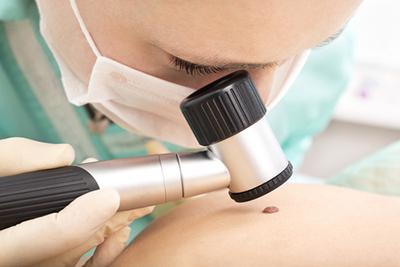
At Advanced Dermatology, you may see us use a specialized tool called a dermatoscope to examine moles more closely. This handheld device magnifies the mole and illuminates it, allowing him to see structures and patterns that are not visible to the naked eye. Dermatoscopy can help differentiate between benign moles and those that may require removal.
Biopsy and Further Testing
If a mole raises suspicion during the examination, Dr. Agha may recommend a biopsy. This procedure involves removing a small sample of the mole for laboratory analysis. The biopsy can help determine whether the mole is benign or malignant (cancerous). Depending on the results, we will discuss the appropriate next steps, which may include monitoring the mole or performing a complete excision.
The Decision to Remove a Mole
If a mole is determined to be benign but is causing cosmetic concerns or discomfort, patients may request removal.
However, in cases when a mole is found to be malignant or precancerous, prompt removal is essential to prevent the spread of cancer. Dr. Agha will discuss the procedure, potential risks, and aftercare with the patient to ensure they are fully informed and comfortable with the decision.
Get Answers About Moles
Regular skin checks and awareness of changes in moles can lead to early detection of potentially serious issues. Dr. Amr Agha and his team at Advanced Dermatology provide expert evaluations and personalized care for skin concerns. If you have questions about a mole or would like to schedule a mole removal, call our Acworth, Georgia, office at (770) 739-7546.